Identifying subrogation potential after a product- or component-related failure starts with testing. At Component Testing Laboratories (CTL), Professional Engineers use destructive and non-destructive testing to determine how and why products fail.
While CTL does not make subrogation determinations, its licensed engineers’ findings help insurers, attorneys, and claims professionals evaluate liability and recovery opportunities. When subrogation is warranted, it can help recover losses, hold manufacturers or installers accountable, and make the insured whole. CTL’s findings, along with the components and products it securely stores, may also serve as evidence in subrogation claims or litigation proceedings.
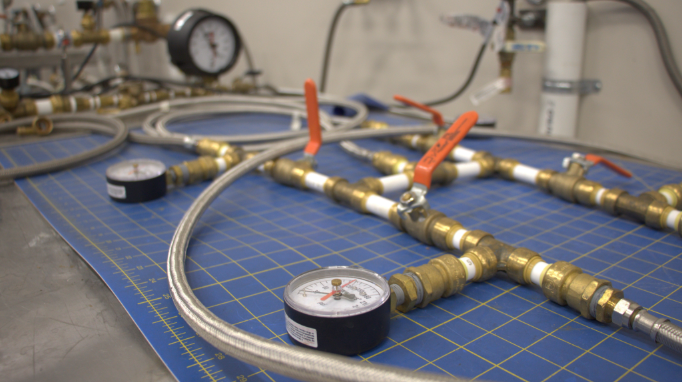
CTL investigates many types of items, but the seven featured below are among the most common. Read about each and why testing them after a loss is important.


Dishwashers
Dishwasher leaks can cause extensive water damage to kitchen floors, cabinetry, adjacent electronics and property items, and other areas of a home or business. When these losses occur, it’s critical to conduct a thorough investigation to ensure potential subrogation opportunities related to the original leak are not overlooked.
Each year, CTL examines thousands of dishwashers to determine the cause of failures to both external and internal components, including:
- Water valves
- Drain hoses
- Sump assemblies
- Heating elements
Learn about specific types of failures that can impact these appliances in Understanding Dishwasher Failures: A Guide for Adjusters.

Supply Lines, Plastic Piping, and Coupling Nuts
Supply lines deliver water to plumbing fixtures and household appliances and are commonly manufactured from copper, cross-linked polyethylene (PEX), or braided stainless steel. Because of its flexibility and durability, PEX is a popular alternative to metal piping and is frequently installed throughout residential and commercial buildings, including within walls, ceilings, basements, and crawlspaces.
Although designed to withstand high water pressure, improperly formulated PEX can degrade when exposed to chlorides in the water supply, leading to fractures, leaks, and significant water damage.
Plastic coupling nuts, commonly used on supply lines connected to toilets and faucets, should be designed with tried-and-true plastic molding practices. If they are not, failures may result in cracking, leakage, or the separation of the connection
Discover how CTL provides flexible testing options for components such as PEX piping in the Non-Destructive vs. Destructive Product Failure Testing Case Study.

Water Heaters
Tank-style water heaters are another common item found at CTL’s two locations, often transported for testing after a failure has caused water damage to residential or commercial property.
Three common failure modes in tank-style water heaters that may be linked to manufacturing defects are:
- Storage tank water heater corrosion
- Anode rod failure
- Drain valve failure
Get details about these failures and why they may present subrogation potential in 3 Water Heater Failures Subrogation Teams Should Know About.

Fire Debris
When a product failure is the most plausible origin and cause of a fire, laboratory testing may be warranted to better understand why and evaluate subrogation potential.
As part of Alpine Intel, CTL can collaborate with National Fire Experts (NFE) certified fire investigators to identify items that may require further analysis.
Common products tested after a fire loss include:
- Ranges and other cooking equipment
- Dryers
- Lithium-ion battery-powered devices
- Space heaters
- Dehumidifiers
Learn more about how a streamlined approach and experienced teams can help maximize recovery opportunities in large loss fire claims with the Tackling Large Loss Fire Claims With Subrogation Potential eBook.

Metal Fittings/Valves
Valves play a critical role in regulating the flow of water to household appliances but can be vulnerable to failures.
In some instances, these may be traced to manufacturing defects, such as improper material formulation.
Brass fittings are also essential components of residential plumbing systems, but they can be susceptible to issues when manufacturing processes or material composition are inadequate, including:
- Stress Corrosion Cracking (SCC)
- Dezincification
Having CTL identify these can help clients determine whether a manufacturing defect contributed to the failure and may reveal potential subrogation opportunities.
Read about two more corrosion types that could point to a manufacturer’s defect in Corrosion Types That Could Signal Subrogation Potential.

Water Filters
The Professional Engineers at CTL examine hundreds of whole-house, under-sink, and point-of-use water filters each year to determine why they’ve failed. Their investigations may include:
- Recreating overpressurization failures
- Subjecting exemplar filters to freezing temperatures
- Using Scanning Electron Microscopes and Energy Dispersive Spectrometry to compare material composition against industry standards
These testing methods help identify manufacturing defects, installation issues, or other reasons for failures.
Find out how failures can manifest in a variety of filter types in Water Filter Failures and Subrogation Potential.

Faucets
Many different types of faucet failures that can occur throughout a home or business could be traced back to manufacturing defects or installation errors.
Common failure modes identified during product testing include:
- Material deficiencies, which can lead to SCC or dezincification
- Insufficient tightening of a compression sleeve during installation
For more on common failures in plumbing systems that may signal recovery opportunities, check out Exploring Subrogation Potential: Plumbing and Appliance Failures.
- ‹ prev
- next ›
- 1
- 2
- 3
- 4
- 5
- 6
- 7
Keep This Property Subrogation Resource on Hand
Designed as a practical resource, CTL’s eBook, Unlocking Subrogation Potential in Property Loss Claims, explains how to identify losses that may be candidates for subrogation, preserve evidence effectively, and utilize product failure testing to inform recovery efforts. It also includes a dishwasher failure case study that demonstrates these principles in action.
Experience for yourself how the Professional Engineers at CTL deliver product failure insights you can depend on.
About Component Testing Laboratories
CTL, a part of Alpine Intel’s suite of services, includes two of the highest-volume forensic engineering facilities in the U.S., designed specifically to address your property subrogation needs, including testing, joint inspections, and storage.
CTL’s in-house transportation service, Loss Logistics, combines fast shipping times with nationwide coverage to streamline evidence collection. Our evidence collection specialists utilize customized packaging to ensure evidence arrives at our East or West Coast facility in an unaltered condition.